• First, the serpentine belt drives your air conditioning system. • Next, the belt powers the alternator. • The serpentine belt may also run the pumps for both the power steering and power brakes. In some Glenburnie drivers’ vehicles, power steering may have an electric drive and power brakes can be vacuum driven. • And, on many vehicles, the serpentine belt powers the water pump (on some cars, the water pump is powered by the timing belt).
Your courteous CAR MEDICS team can perform a visual inspection of the belt to see if it has any cracks that signal the belt could fail soon and will measure the amount of belt material to make sure there is enough.
There’s a special, spring loaded pulley attached to the engine that is used to make sure the serpentine belt remains tight (at the proper tension) called the tensioner pulley and sometimes an extra pulley call the idler pulley. Their critical job is to make sure there’s a constant tension on the serpentine belt so that it doesn’t slip. The spring can become worn and no longer provide the necessary pressure to keep the belt tight. That’s why CAR MEDICS recommends that the tensioner, and the idler pulley if so equipped, be replaced at the same time as the serpentine belt.
All in all, the serpentine belt’s a vital part for the function of your vehicle. And it’s not that expensive to replace at CAR MEDICS – so it’s good to do so before it fails.
Give us a call
CAR MEDICS – GLENBURNIE 1985 Perth Road Glenburnie, ON K0H 1S0 (613) 546-6766
or
CAR MEDICS – KINGSTON 37 Rigney St. Kingston, ON K7K 6Z3 (613) 547-8473
At CAR MEDICS – GLENBURNIE we install quality NAPA replacement parts.
Your winter tires should be installed when the daily high temperature is 7C or lower. Today’s “WINTER” tires are meant to improve traction in colder weather, regardless of whether there is ice and snow on the ground. All season radials begin to lose their grip below 7C, even on dry pavement! If you don’t drive great distances, it will not hurt to install your winter tires a little early. I think any time in October is a perfect time to install. Sure their may be some warmer days ahead. But you will be prepared for that freak winter storm or icy morning AND you’ll beat the rush.
I’ve seen it time and time again. Customers will buy a car privately that “was just safety inspected two months ago”. Often they’ve driven 2 or 3 hours to find this great “deal”. They’ve gone so far and it’s such a great price that they rush into it, not wanting to miss out by having someone else buy it before them. They transfer the ownership and get a temporary plate sticker, planning to have it safety inspected as soon as they get it home. When the new owners finally bring it in for the inspection, it reveals that this great “deal” needs repairs and maintenance that often add up to more than they paid for the car in the first place! And, it may not even be worth repairing it to pass the safety!
That is exactly what happened to a customer that recently came in to see us after buying a 2009 Ford sedan. It was purchased privately from a guy who claimed it had “just been safetied a couple of months ago, so it’ll need nothing for safety inspection”. They even drove to Toronto to get this car, likely paying cash. They never really said what they paid for the car but I believe it was around $2500. The inspection revealed so many things wrong that the cost to get this car on the road was going to be almost $5000!!! They ended up scrapping the car. This was AFTER they’d already purchased it, transferred it to their name, paid the HST at Service Ontario, paid for insurance, not to mention their wasted time and gas money to go out of town and drive it back. Hopefully, they didn’t pay for an overnight hotel room to boot! Take a look at a copy of their inspection results and a good example of one of Car Medics’ digital inspection reports here.
So, what’s the best way to find and buy a good used car? Here are the top ten tips you can use to keep your hard-earned money in your pocket and not get swindled by some stranger telling you what you want to hear about a car that isn’t worth fixing.
#1 – If it sounds too good to be true, IT LIKELY IS!
After seeing thousands of cars come in to Car Medics over the past 30 years, our rule of thumb is that most cars that you can buy for less than $3000 often need at least $3000 worth of work! It’s a one in 10,000 chance that you’ll come across that perfect, well-maintained, hardly-driven car owned by an elderly person. So, be very cautious and don’t believe everything someone tells you about a car they are selling, it could just be a sales pitch.
#2 – Get the car checked out by a reputable repair shop BEFORE you hand over any money!
A good inspection prior to purchasing is worth its weight in gold. At the very least, it should pay for itself since there will be some maintenance and/or repair items that the inspecting shop will discover that will help you negotiate a lower price. Always have it looked over by a repair centre, like Car Medics, that will give you an unbiased opinion of the condition of the car. If you’re viewing a car out of town, contact us for a recommendation on where to have it checked out. We often know good repair shops in other cities and, if not, we can use our contacts to find a reputable one for you. As a last resort, you can take it to the car dealership for that particular type of car. So, if it’s a Honda you’re looking at, take it to the Honda dealership and so on. Just keep in mind that a car dealership may use this opportunity to try and make that used car seem worse than it actually is and try selling you one of their cars! This is why I prefer an independent repair shop to look at the car so that you get a truly unbiased opinion. And, I don’t recommend you go to the seller’s guy for this either. You just want to be sure the inspecting garage is working for you, not the seller. The best advice is to identify where you’ll get the inspection done before you even leave home. Pre-arrange it with the local shop and make sure the seller is aware of this before you go. If the seller doesn’t agree, follow tip #3.
#3 – If the seller is not willing to allow you to get the car inspected BEFORE you buy it, DON’T EVEN GO SEE THE CAR!
When they don’t agree to let you get it checked out, they are likely hiding something and know that the car either won’t pass safety or there’s something big wrong with it. Keep shopping!
#4 – Be wary of WHO you’re buying a car from.
Many backyard “car dealers” will pose as the current owner of a car. They will buy a car for cash from someone, fix it up and resell it without ever transferring it into their name first. They may have patched up a few things to make it worth more than they paid and now hope to pass the band-aided problems onto you for a quick profit. The government calls these people “curbsiders”. These guys can be smart, but sneaky. They’ll have the original owner sign the ownership and the bill of sale, while leaving all other areas blank and ready for YOUR NAME. Ideally, you want the guy you’re buying the car from to sign the documents in front of you, not before you get there. You don’t want to be involved in some shady deal. I recommend you ask to see their driver’s license (snap a photo of it if they’ll let you!) and be sure it matches the name on the ownership. If the names don’t match, I suggest not buying it. You could be in for some issues at Service Ontario when they discover who actually owns the car. This could make the bill of sale useless when it’s not signed by the real owner. Your cash will be gone and you will have no idea who you gave the money to!
#5 – Even if it comes with a valid Safety Inspection, get it inspected as per Tip #2!
Even if it comes with a valid Safety Inspection, get it inspected as per Tip #2!
Just as in Tip #2, you want to be able to choose the repair shop that checks the car out, not the seller’s buddy who safetied it for him. And, more importantly, safety standards are MINIMUM STANDARDS, not necessarily indicative of a car in perfect or even good condition. For example, while most new tires start out with 11/32” or 12/32” of tread, tire treads pass safety inspection with a mere 3/32” of tread remaining. This is the level of wear in which the tire reaches the “wear bars” and the point at which the manufacturer says the tire should be replaced. The tires may be safe today, but after a few month’s driving, they won’t be. Similarly for the brakes, most new brake pads start out with about 10mm of pad thickness but only 1.6mm are required to pass a safety inspection. We often recommend that our customers replace their brakes when they get down to less than 3mm. It’s just good to know how long things like brakes and tires will last when you first buy a used car, and you’ll only likely get the full story when you pay for the inspection yourself. A safety inspection is not a guarantee and only means the car is safe TODAY, not tomorrow or next week. When we perform a safety inspection (or any inspection for that matter), Car Medics will email you a digital copy of our inspection report, complete with photos and explanations of what needs to be done.
#6 – Figure out what you’re willing to pay before you start to negotiate!
Search comparable vehicles and what people are asking for them. The most important factor in what a similar car is worth is MILEAGE, not necessarily the options it may have. Once it’s inspected and you have a list of any deficiencies, you can adjust your offer accordingly. Keep in mind that a car for sale privately and one at a dealership will be worth different amounts of money. A car at a dealership is generally more expensive than a privately owned car for sale because the buyer has some recourse to go back to the dealership if something goes wrong. The private seller, on the other hand, is almost always off the hook once you drive away. So, as a buyer in a private deal, you’ve got to be pretty sure you want to be stuck with the car as soon as you hand over the cash. If you need some help understanding what a car might be worth to buy, contact us
#7 – Research common problems with the car you’re buying before you even go to see it.
Some cars have particular problems that make them cars you should stay away from. For example, it would be good to know that the car you’re thinking about buying has a high failure rate on the transmission. Just google the car’s name and add the words “common problems” or “complaints” and do some reading on it. And, just like any other reviews, remember to weed out the people that complain about everything. More importantly, Car Medics is a great resource for common faults and recommendations on what type of car not to buy. Simply contact us for advice anytime!
#8 – Don’t be in a hurry!
Most people rush into buying a used car. Do your research on price and reliability. If you’re in a hurry and need a car now, take someone else with you that will be less emotional about the purchase. If you don’t have anyone to go with you, contact Car Medics and we’ll give you some sound advice before you make a purchase.
#9 – Make sure the car you’re buying suits your needs, not just your pocket book.
You find a vehicle in the right price range, but it’s not exactly what you need. Perhaps a minivan is what you wanted but for the money you have, you can only find a 4 door car. If you buy the car, it may cost you more in the end because you may be inclined to trade it in and buy what you really need sooner rather than later. This will mean money wasted buying and selling the car that wasn’t right for you.
#10 – Don’t be afraid to say no and move on!
When something isn’t right, no matter how far you’ve driven or how many inspections you’ve paid for, just decline purchasing it and keep looking for the right car. You may have spent a lot of time speaking to the owner and now feel bad backing out, but remember it’s a business transaction, not a friendship. You don’t want to get stuck with the wrong car and have to pay too much money to fix it or even sell it again yourself!
Got Used Car Buying Tips Questions?
Got Used Car Buying Tips Questions?
Car Medics has been in business for 27 years, serving the Kingston and surrounding areas. We are experts at automobile repair and have sold 100’s of used cars over the years. If you have any questions about buying a used car or want our opinion, don’t hesitate to contact us. Dr. Phil and the professional team at Car Medics are always accepting new patients. We have two locations to server you. Call 613-547-8473 in Kingston and 613-546-6766 in Glenburnie!
Car Medics has the winter tires you need and the expert advice to answer all your questions. Below are the questions we get every fall regarding winter tires, and the answers to go with them.
1. Are Winter Tires Really Necessary?
Simple Answer: YES!!! There have been many, many studies on the effectiveness of winter tires. Experts, and drivers that use them, all agree that they are a must for winter driving. All season radials, which most new cars come equipped with, start to get stiff and begin losing their grip (traction) at 7 degrees Celcius!!! This means that when it’s cold out, whether there is snow on the ground or not, all seasons will not grip as effectively as winter tires. Even some light frost on the road surface on a cold November morning can prove to be treacherous with all seasons. This is why Winter Tires are no longer called “snow” tires. They are designed for WINTER temperatures and conditions, not just snow! The rubber in winter tires has improved flexibility in cold weather that make them way more effective than all seasons, even on dry pavement.
The cost of winter tires can be prohibitive for some people, but when you consider that your all seasons (which you will now use only during the summer months) will last twice as long because they will be sharing the mileage with the new winter tires, you begin to understand that you are simply buying your next set of tires early and focusing on safety for the winter months. A good winter tire with average driving should last 4 to 5 winters. It is also important to consider that by preventing even the smallest accident from happening, you will not have to spend the $500 to $1000 your insurance deductible demands, not to mention protecting you and your family from injury when your car slips off of the road or into someone else!
Watch this video series and decide for yourself!
2. Should I Buy Winter Rims?
Simple Answer: MAYBE!!! There are a lot of factors to consider when deciding on whether you should buy winter rims for your winter tires. It’s always better to have winter rims but, depending on the type of car and your actual tire size, they may cost more money than they are worth. In some cases, we can downsize (install a smaller size of rim and corresponding tire that is compatible with your car) and sometimes save enough money to offset part of the cost for rims because smaller winter tires are generally less expensive.
The advantages to having winter rims include:
Keeping your original rims in perfect condition by saving them from the salt and hidden potholes/curbs in winter
Saving money over time since it’s less expensive to change your tires spring and fall
There is less wear and tear on both sets of tires when they don’t have to be stretched on/off the rims in spring and fall
You will save time during the tire changeover because it takes about half the time to swap your tires out when they’re already on rims.
3. Which Winter Tires Should I Buy?
Simple Answer: THAT DEPENDS!!! Generally, the more expensive the tire, the better the winter performance, but not always! Let our expert Service Advisors at Car Medics narrow down your choices by taking into account all of the important factors:
Your budget. Not all winter tires are created equal and we have the experience to help you choose the right one for your safety concerns and your budget.
The tires that best suit your vehicle
How much you drive and where you drive are very important factors to consider.
How long you plan on keeping the car. Winter tires and rims are an investment that pays back over time. Sometimes, tires and rims can also be used on your next new or newer car.
Style may be important to you as well. Car Medics has many rim options available. From black rims with hubcaps to sharp-looking, cost-effective alloy wheels, we can help keep your car looking great this winter!
Car Medics not only sells all the major tire brands, but we also know which brands are offering the best rebates too! So, we can find you the right tire at the right price!
4. Do I Need TPMS Sensors?
Simple answer: MAYBE!!! Does your vehicle have a tire pressure monitoring system? Not all cars come with tire pressure monitoring, but many that do have TPMS require the use of a tire pressure sensor installed INSIDE each wheel rim. This means that when you purchase new winter rims, you may also need to purchase a set of 4 TPMS sensors to go along with them. And, once installed, those new TPMS sensors will have to be programmed to your vehicle. To know for sure, simply ask us and we’ll tell you what you need.
5. I Have TPMS Now, Can I Go Without Sensors In My Winter Tires?
Simple Answer: YES, BUT IT’S NOT RECOMMENDED!!! In our view, the worst time of year to get a flat tire or be broken down somewhere is during the winter. The most common breakdown is caused by a flat tire and this can often be prevented by having your tire pressure monitoring system working correctly, warning you before it’s too late. And, if you have TPMS now and decide not to have them in your winter rims, the TPMS warning light will be illuminated on your dash all winter long!
6. When Should I Have My Winter Tires Put On?
Simple Answer: OCTOBER!!! A general rule of thumb is to have your winter tires installed when the temperatures fall below 7 degress Celcius as a daily high. Winter tires, due to the softer rubber compound, will wear a little faster than all season radials, but it’s not dramatically different. On average, a set of all season radials will last between 60,000 km and 80,000 km whereas a set of winter tires generally will last 40,000 km to 60,000 km. Winter tires do wear a little faster, but not so fast that you can’t afford to have them installed BEFORE you really need them. This means that, unless you drive more than 800 km per week, they should be installed before November and well before you ever see the white stuff falling! It’s better to be safe than sorry since it only takes one slide off the road to change everything. Plus, you don’t want to be one of those 5,000+ Kingston, ON car owners desperately calling around to see who can put their winter tires on TODAY, while a bad snow storm quickly approaches! By then it will be too late.
Still Have Questions About Winter Tires Or Would Like A Winter Tire Quote?
Call or Email Car Medics TODAY!!
Car Medics has been in business for 27 years, serving Kingston and surrounding areas. We are experts at all aspects of automobile repair, including winter tires and tire installation. We sell all the major tire brands and are very competitive. If you have any questions regarding winter tires or would like a tire quote, send us an Email, fill out our Tire Quote Request Form or call our professional team at Car Medics. We are always accepting new patients and have two locations to serve you. Call 613-547-8473 in Kingston and 613-546-6766 in Glenburnie!
Stay safe and healthy!
Don’t Let Covid-19 Get Your Battery!
What is the job of the battery?
A battery stores energy to allow you to start your car. It also absorbs any excess charging that your alternator produces that your car currently does not need.
What keeps my battery charged?
Your vehicle’s alternator or charging system will charge the battery whenever the engine is running and is able to provide even more charging while you’re driving.
Why does my battery go dead if my car sits idle too long?
Cars today have many onboard computers and modules that have to keep memory and track of time. From clocks and radio presets, to saving memory seat positions and keeping on-board theft-deterrent systems active, there are many items that continuously consume small amounts of power while the car is parked. Gradually, after your car sits for a number of days or even weeks, these components will draw power until your battery is completely dead.
How often and how far do I need to drive to keep my battery charged up?
Cold temperatures reduce the energy reserves that a battery has available to start your car. And, in colder weather, it takes more power from your battery to turn the engine over because the oil is thicker. Let’s assume that your battery is charged 100%. If it’s -20C outside, the actual capacity could be reduced to 80% simply because it’s cold! Factor in that an older battery’s energy storage capacity diminishes gradually over time, and you can easily understand that you can get into trouble if you car sits for more than a day or two without driving it!
Can a battery be damaged if it goes dead?
The simple answer to this is, YES, since most batteries can be damaged when they are repeatedly allowed to fully discharge (go dead). And, in winter, a dead battery can actually “freeze” since the sulfuric acid inside becomes more and more like water when it goes dead. Water freezes at 0C and if your battery is basically full of water, when it freezes, it expands and can crack/damage the lead plates that normally are suspended in acid. A damaged battery may never recharge fully and you can even damage your alternator since it will work and work to charge this bad battery until it overheats and/or wears out.
I’ve been driving my vehicle every couple of days, why is my battery still going dead?
It could be that your battery has seen better days, that you’ve left something turned on in your car or that you just haven’t been driving it often enough or long enough. The trick with keeping your battery charged up is to drive far enough every time it’s started. As mentioned, if it’s cold outside your battery may already be starting out with only 80% capacity available. And, a single start may draw another 20%, or more, from it’s storage of power, leaving you with only 60% or less until it’s driven. Realistically, it may take 20 to 40 minutes of steady driving to recharge your battery back up to a full charge. So, if you regularly drive it for only 5 or 10 minutes at a time, it is unlikely that it gets charged up enough to bring it back up the level of charge you started with.
Here’s an example of a driving pattern that may be killing your battery:
It’s -20C outside and your battery starts out fully charged but, due to temperature, really only has an 80% capacity
You start the engine and now, due to the power needed get it running, you’re down to 60% capacity
You then drive 10 minutes to get groceries and during the drive the charging system only has a chance to recharge back up by another 10%. So, it’s now back up to 70% capacity
You restart your car after getting groceries and, since it’s slightly warm from the drive there, this start only drops the capacity by 10%, bringing the current capacity back to 60%
You drive home for another 10 minutes and it recharges the battery by another 10%, bringing it back up to only 70%
You park the car – now withonly 70% capacity available for the next start!
So, even though you’ve driven the car, the overall result is that the battery is weaker than when you started!
If you repeat this type of driving again and again, eventually the battery will get lower and lower in charge and possibly fail to start your car
Subtract the additional consumption your car uses normally when it’s parked (possibly even more time sitting due to the pandemic) and your car may be draining the battery of it’s capacity by another 5% per day
With this idle time and the extra the toll on the battery from the starts and stops of short trips, and it’s not hard to see how your battery can gradually get weaker and weaker until it’s time to call a tow truck!
Car Medics’ Tips To Keep Your Battery Going Strong:
Tip #1 – Regular Battery Testing
Have your battery tested at least annually to be sure it’s still good. (Car Medics tests your battery EVERY time we change your oil!)
Tip #2 – Replace It If It Fails Testing
Replace your battery when it fails testing, even though it may seem as though it’s still been starting the vehicle ok. A battery that fails testing is harder to charge and needs to be charged more frequently, not unlike a cell phone where the battery has to be charged all the time. This tough-to-charge battery, will make the charging system work harder and harder and could possibly cause premature failure of the alternator!!!
Tip #3 – Replace Battery When It’s Old
Replace your battery when it’s 5 years old, even if it still tests ok. An old battery, even if it tests ok, can fail without warning and may also be causing extra workload for your charging system to keep the battery charged up. Car Medics sells good quality Napa Batteries that last!
Tip #4 – Drive Regularly
Drive your vehicle at least every 3 days, ensuring that it is driven for at least 20 minutes after each start.
Tip #5 – Drive Long Enough
If you’re starting it for a very short journey, have someone go with you so you can leave them in the car and leave the car running while you run inside somewhere to make a quick errand. This will save the second start and if it stays running, the battery will charge up even more!
Tip #6 – Extend Short Trips
If you have no option to take someone with you and leave it running on a short trip, add an extra drive on the end of it before you park it back at home again. It’s always nice to get out of the house during the pandemic!
Tip #7 – Turn Off Car Accessories When Parked
Turn off all accessories when you park your car such as heated seats, blower motors and radio so that you save all the battery power you have available to START the car. Once the car is running, you can turn on all the items you want.
If you have any questions or would like your battery tested, give Car Medics a call or send us an email and we’ll keep you and your car mobile this winter!
Car Medics has been in business for over 27 years, serving Kingston and surrounding areas. We are experts at all aspects of automobile repair, including diagnostics and charging systems. We also have great advice!
“We Are Always Accepting New Patients”
Two locations to serve you better:
Call 613-547-8473 for Kingston location
Call 613-546-6766 for Glenburnie location
Stay safe and healthy!
Simple Answers from CAR MEDICS – KINGSTON and GLENBURNIE for: Cooling System
CAR MEDICS – Answer:
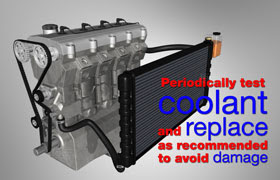
That’s a really good question for car owners to ask, because if you don’t have the full answer you may end up in trouble. It would seem that if your engine is running at the proper temperature that everything must be OK. But the fact is that engine overheating is the most common cause of mechanical failure for Glenburnie and Kingston car owners. So how do you get from everything is just fine to suddenly overheating and potential engine damage?
Truth is, it is not a sudden process, but it is an invisible one. Your engine coolant circulates through your engine where it absorbs heat and then flows through the radiator where it is cooled – and then back to the engine again. As long as the coolant is able to flow freely – and there are no leaks – then the coolant can do its important job. This is the point where drivers have to look deeper.
The cooling system is a dangerous environment: very hot, with a number of reactive materials like various types of metal, plastics, and rubber. Over time the coolant becomes corrosive. Small pieces of metal and other materials flake off and circulate in the coolant. As these bits start to clog up the small passages in the radiator, they impair the coolant flow, leading to overheating. Corrosive coolant can actually eat away at the system and cause leaks as well.
Now new coolant is full of anti-corrosion additives. These additives neutralize the reactions that lead to corrosion. The additives are eventually used up, leaving the cooling system unprotected.
This is why your automobile manufacturer and the team at CAR MEDICS, both Glenburnie and Kingston, give a recommendation for when your cooling system should be serviced. Your courteous CAR MEDICS service advisor can also have our certified technicians test your coolant for freeze point and PH to see if it needs to be replaced (if you’ve added straight water to the system these numbers may be off). You need to get fresh coolant in there to continue to protect against dangerous corrosion.
So Glenburnie and Kingston drivers who’ve gone beyond the recommended service interval should take care of this critical maintenance service to prevent unnecessary repairs down the road.
Call the Car Medics team at:
CAR MEDICS – GLENBURNIE
1985 Perth Road
Glenburnie, ON K0H 1S0 (613) 546-6766
or
CAR MEDICS – KINGSTON
37 Rigney St.
Kingston, ON K7K 6Z3 (613) 547-8473
There are many advantages to having winter rims for your new winter tires, in Kingston, Ontario. I will list them here:
1. There is less wear and tear on both sets of tires as they do not need to be “stretched” on and off of the rims spring and fall
2. You will save on the cost of having your tires changed over every spring and fall. When they are already on their own rims, it can be approximately half of the cost when compared to having them install on the rims and balanced. On average, you will save $50-70 per season, just for having your winter tires already on their own rims. For most basic steel winter rims, this means that they will pay for themselves after only 4-5 seasons, or 2-2.5 years. And, if you have the same vehicle for longer than 3 years, you will actually be saving money by having winter rims.
3. You will save your original rims from the damaging winter conditions that include not only hidden curbs and potholes, but also salt and corrosion as well. The trade in and/or resale of your vehicle could actually be higher when your original alloy wheels are not all pitted, corroded and/or damaged by scraping curbs and potholes.
4. There may be an option to “downsize” your tires to a smaller size for winter tires and rims in order to save money. Smaller tires and smaller rims are less expensive. And, in some cases, downsizing can end up saving you more money than the cost of the rims themselves simply because the smaller tires are so much less! Many new cars, trucks, vans and SUV’s come with larger and larger wheels all the time and many of these vehicles able to utilize a smaller diameter wheel. For example, if your car, truck, van or SUV comes with 18″ tires, it may be possible to install 17″ or even 16″ tires on it. In order to achieve this smaller rim size, Car Medics would choose a smaller tire size that maintains your wheels overall outside diameter. In essence, the rim gets smaller while the sidewall gets taller – thus maintaining the same outside diameter. When the outside diameter doesn’t change, you will notice no difference in your speedometer or how the vehicle will handle. And there will be no negative effects on you sensitive AWD or 4WD systems. This taller sidewall, will also help prevent the rim from being damaged whenever you do come in contact with a hidden curb or pothole under the snow by providing an extra cushion of rubber between the road and your rim.
5. You will also save time every spring and fall, whenever you have your winter tires and rims installed on your vehicle. On average, you will save between 30-45 minutes when installing your tires and rims that are already assembled, versus the time it would take to strip your summer all season radials off the rims, install the winters on them and then balance and finally install them on your car.
So, in conclusion, make sure you investigate the possibility of downsizing your winter tires or at least installing your winter tires on their own set of rims. You can start by calling or emailing Car Medics for a quote for winter rims for your existing winter tires or for a new winter tire and rim package. We not only have great pricing on winter tires and rims, but are experts at downsizing as well! Contact us today to ensure you get the right winter tires and rims to suit your needs at the best possible price. We will also make sure you receive all of the tire manufacturer rebates as well!
Car Medics Tech Question:
I’m Alex. My Check Engine Light came on in my pickup. I’ve tried several things to make it go off but nothing has worked. What should I do?
Car Medics Answer:
Like Alex, most of us Kingston drivers have experienced a check engine light coming on suddenly. We’re frustrated because we don’t know why.
Of course that’s perfectly understandable: There are hundreds of reasons for the check engine light to come on – and there’s only one light.
Alex said she tried several things to get the light to go off – but it didn’t work. Her goal was to get the light to turn off. I would suggest that the goal should be to find out what caused the light to come on in the first place – and fix it.
You can search the internet and find millions sites with tricks to get your pickup check engine light to turn off. But what good does that do – whatever caused the light to come on is still wrong. Not getting to the bottom of the problem can lead to other problems for Kingston drivers – some minor and some more serious (and costly).
Your friendly Car Medics service professional can get you started down the road of properly diagnosing the problem and getting it repaired – try him first next time.
Give us a call
Car Medics
37 Rigney St.
Kingston, ON K7K 6Z3 613.547.8473
Today’s Car Medics post contains a quick overview of the fuel system. It starts with the fuel tank. The fuel pump is located inside the tank and pumps fuel out to the engine. Somewhere along the way is a fuel filter whose job is to filter out dirt before it hits the engine.
Then there’s the fuel intake system and the fuel injectors that deliver the fuel to be burned in the engine. Our focus is to discuss how to make the various components of your fuel system work well and last as long as possible. Now the best thing you can do for your fuel pump is to use good quality fuel. Top tier Kingston gas typically has fewer contaminants and more detergents to keep things clean. Using good gas, or adding a fuel system cleaner to your tank, can prolong the life of your fuel pump. Because the fuel pump lives inside your tank, it’s pretty expensive to replace, so helping it last as long as possible is a worthwhile goal.
The fuel filter catches dirt and contaminants. When it’s clogged, your pickup engine may not be able to get enough fuel and could sputter. Many fuel filters have a bypass valve that allows unfiltered fuel past when the filter’s clogged. That prevents your engine from dying while you’re driving around Kingston, but it can’t protect your engine from dirty fuel. Check your owner’s manual or talk with your friendly Car Medics service professional about when you should replace your fuel filter.
Now fuel will cause gum and varnish to build up in the fuel intake system. A professional fuel system cleaning at Car Medics will remove the gunk to keep fuel flowing freely and help prevent contamination from reaching your fuel injectors and your engine. Fuel injectors squirt fuel into the engine. The fuel must be delivered in a precise amount, at a precise time, under precise pressure and in a precise pattern. Pressure can range from 45 pounds per square inch to 45,000 pounds per square inch depending on the engine.
As you may guess, fuel injectors cost a lot in the Kingston area. Allowing them to get gummed up will not only hurt your performance and gas mileage, it will cause the injectors to wear out much more quickly than they should.
A professional Car Medics fuel system cleaning will keep injectors clean and working correctly. It’ll also clean deposits from the inside of the combustion chamber and off the intake valves giving you optimum performance and mileage. Check with your friendly Car Medics technician and see when he recommends you get a fuel system cleaning.
Give us a call
Car Medics
37 Rigney St.
Kingston, ON K7K 6Z3 613.547.8473
At Car Medics we install quality NAPA replacement parts.